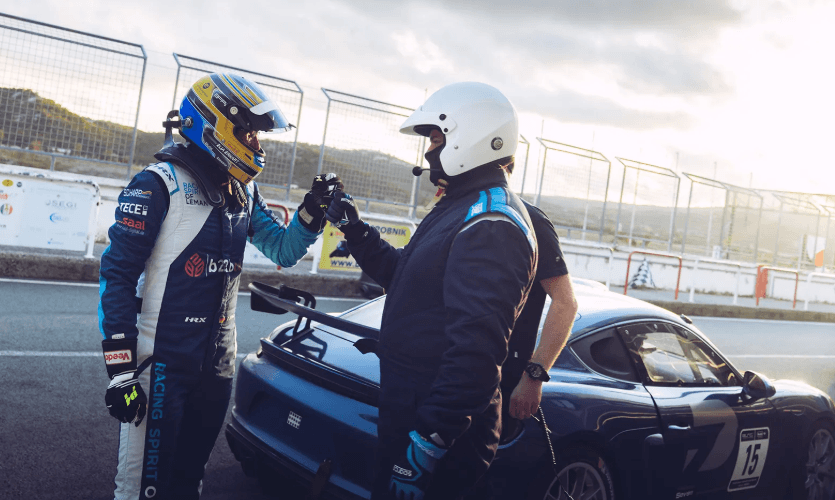
Chasing the Perfect Line: Inside the Porsche Trackday World of European Speed Club
There is a particular sound a flat-six makes when it comes on cam past 6,000 rpm through the Karussell at the Nürburgring — a sound that has very little to do with horsepower figures on a spec sheet and everything to do with why people fall in love with Porsches in the first place. It’s this feeling, more than any single circuit or car, that European Speed Club has built its reputation around: turning the abstract idea of “driving a Porsche properly” into a real, organised, unforgettable few days on some of the best asphalt in Europe.
Based between Switzerland and Germany, European Speed Club occupies a fairly specific niche. It isn’t a car rental company, and it isn’t quite a travel agency either. It sits somewhere in between, curating trackdays and road trips built entirely around Porsche ownership — the kind of trips where the itinerary is planned by people who actually know the difference between a 991 GT3 RS and a 992 GT3, and who understand that a good trackday depends as much on tyre pressures and paddock logistics as it does on the layout of the circuit itself.
What Separates a Real Trackday From a Track Rental
Anyone can book a track slot. Turning that slot into something worth flying in for is a different matter. A well-run Porsche trackday starts with car preparation — brake fluid checked, tyre pressures set cold and adjusted between sessions, and a technical briefing that actually matches the driver’s skill level rather than treating a first-timer in a Cayman GT4 the same as someone who’s run a full season of club racing. European Speed Club structures its days around exactly this kind of calibration: instructors who ride along, sessions grouped by pace rather than by whoever paid first, and enough track time that the day doesn’t feel like queuing for a rollercoaster.
There’s also the question of which circuit. The Nürburgring Nordschleife gets most of the attention, and rightly so — 20.8 kilometres of blind crests, elevation changes, and corners with their own folklore is not something you find anywhere else on the continent. But some of the best days out happen on the circuits that don’t make the postcards: the fast, flowing rhythm of Spa-Francorchamps through Eau Rouge and Raidillon, the technical precision demanded by the Red Bull Ring in Austria, or Mugello’s blend of Tuscan scenery and genuinely terrifying high-speed sections. A trackday programme built around Porsches tends to favour circuits where the car’s balance and steering feel can actually be felt — which rules out a lot of the flatter, lower-grip tracks that suit other machinery better.
Where the Road Trip Comes In
The trackday is often only half the trip. European Speed Club’s approach leans heavily into the idea that a Porsche belongs on the road as much as on a circuit, and some of the strongest itineraries link two or three circuits together with driving days in between — the kind of routes that take in the Grossglockner High Alpine Road, the switchbacks above Lake Como, or the quieter departmental roads of the French Alps where a 911 finally gets to stretch its legs without a speed camera every two kilometres.
Accommodation on these trips tends to matter more than people expect going in. A long day of driving, whether on track or over a mountain pass, is far better closed out at a small family-run hotel with secure parking and a decent dinner than at an anonymous business hotel near a motorway junction. The better operators in this space — and this is where European Speed Club has carved out its niche — treat the overnight stops as part of the experience rather than an afterthought, choosing places within easy reach of fuel, tyre support, and roads worth driving the next morning.
Who Actually Books These Trips
It’s a mixed group, more so than the marketing photos might suggest. There are the collectors with two or three 911s in a climate-controlled garage who simply want somewhere legal and safe to use them properly. There are groups of friends splitting a trip the way people used to split a ski chalet, treating it as an annual event rather than a one-off. And increasingly there are corporate groups — dealerships rewarding top clients, or companies using a few days at Spa or the Ring as a genuinely memorable incentive trip rather than another round of golf.
What most of them have in common is a car they’ve owned for a while and never really driven at its limit. That gap between what a modern 911 or Cayman is capable of and what most owners ever experience on public roads is, in a sense, the entire reason this kind of trackday tourism exists.
See also: How Golf Carts Fit Into Busy And Dynamic Lifestyles?
Planning One of These Trips
The practical side matters more than it might seem from the outside. Insurance needs sorting well in advance, since standard road policies rarely cover circuit use. Transport of the car itself — whether it’s driven to the venue or shipped — has to be arranged around the trackday schedule. And group size changes everything about the tone of a trip: eight cars moving together through the Alps is a very different proposition to a solo booking at a single-day event.
For anyone weighing up where to start, European Speed Club‘s own itineraries are a reasonable benchmark for what a properly organised Porsche trip should include: circuit variety, sensible pacing between track and road days, and accommodation chosen with actual drivers in mind rather than tour groups. It’s a fairly small world once you’re in it, and the operators who understand both the cars and the roads tend to be the ones people come back to year after year.